
7th Edition futurEU Competition 2027
From Rome to Today:
Europe's Democracies in a Contested World
Registration is open
Registration is open
Open until January 19, 2027
Open until January 12, 2027

We are excited to launch this year’s futurEU Competition, an initiative that brings students’ ideas into real policy debate. The 2027 theme invites you to think about the future of European democracies.
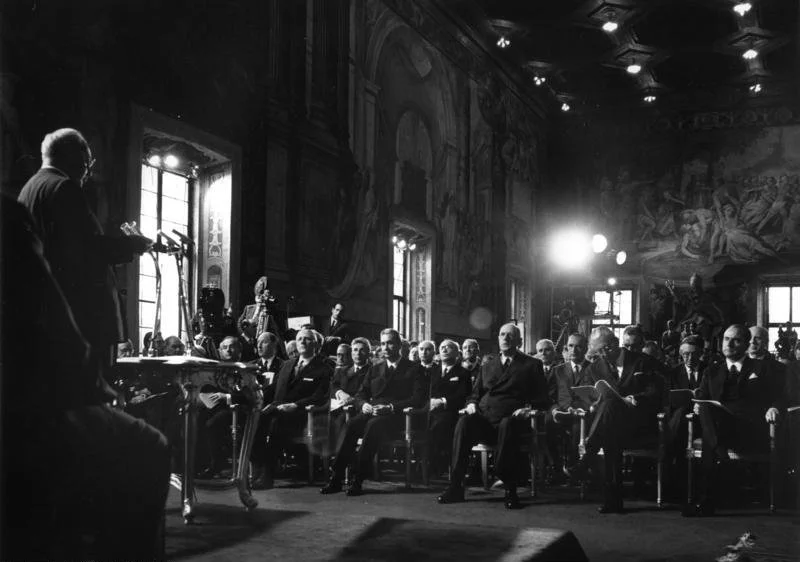
2027 marks the 70th anniversary of the Treaties of Rome. What began in 1957 as a project for peace and prosperity by six founding states has grown into a union of 27. Democracy has become one of the EU’s core values along the way. However, in today’s world, democracy can no longer be taken for granted. The question of what it means for Europe and how its democratic resilience can be strengthened is therefore more relevant than ever.
Now it is your turn: What does it take for Europe’s democracies to thrive in a contested world? Identify the issue you consider to be the most important and develop your own ideas on how Europe can respond. We look forward to receiving your responses on how to engage with this challenge.
Register (until January 19, 2027) and send us your proposal (one idea per submission) in the style of three “threads” (max. 250 words in total) by February 12, 2027!
The Theme
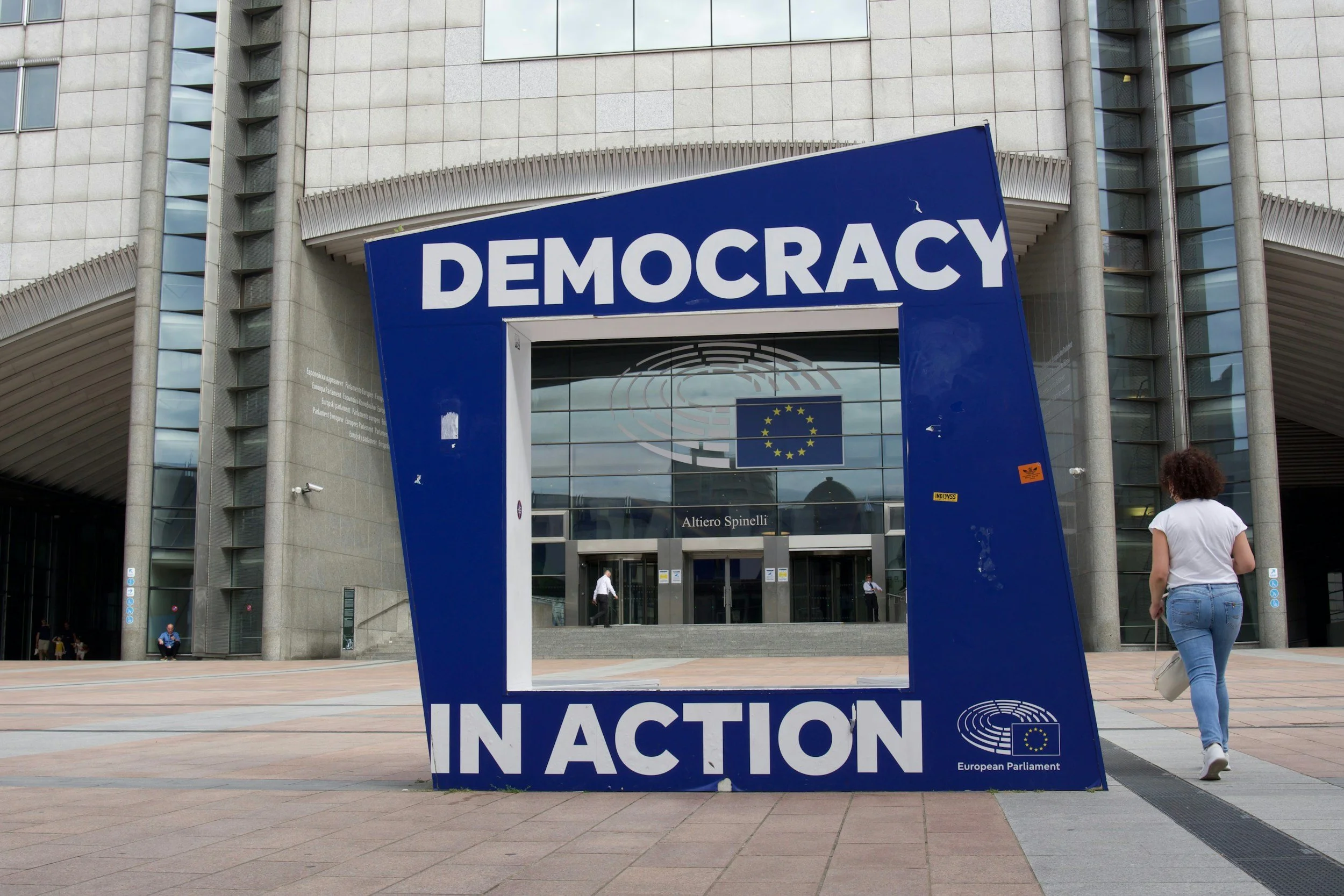
On 25 March 2027, Europe will mark seventy years since the signing of the Treaties of Rome, through which six countries founded the European Economic Community in 1957 and laid the foundations of today’s European Union. What began as economic cooperation between six democracies has grown into a Union of twenty-seven Member States built on shared values such as democracy, the rule of law and respect for human rights.
Seventy years later, these values are under pressure both inside and outside the Union, from disinformation and foreign interference to the erosion of the rule of law, falling trust in institutions and a more confrontational international order. This edition invites participants to look at how far the European project has come since Rome and to propose concrete policies that can help Europe’s democracies remain strong and credible in a contested world. We inviteyou to think about democracy in a broad way including but not limited to elements of social cohesion, digital governance/sovereignty, education, EU reform, foreign policy and much more.

Timeline Competition
-
Deadline for Individual Registrations
January 12, 2027
The management team will match you with other individual registrants.
-
Deadline for Team Registrations
January 19, 2027
-
Deadline Idea Submission
February 12, 2027
Submit an abstract of your visionary idea on our website by the deadline!
-
Notification of Semi-Finalists
February 21, 2027
We will announce the teams who have made it into the semi-finals.
-
Deadline Policy Brief Submission
March 21, 2027
You and your team will turn your idea into a full policy brief.
-
Announcement of Finalists
Early April 2027
We will announce the teams who will be invited to take part in the futurEU 2027 final in Berlin!
-
Finals in Berlin
April 2027
Finalist teams will have the opportunity to present their ideas infront of an expert jury.
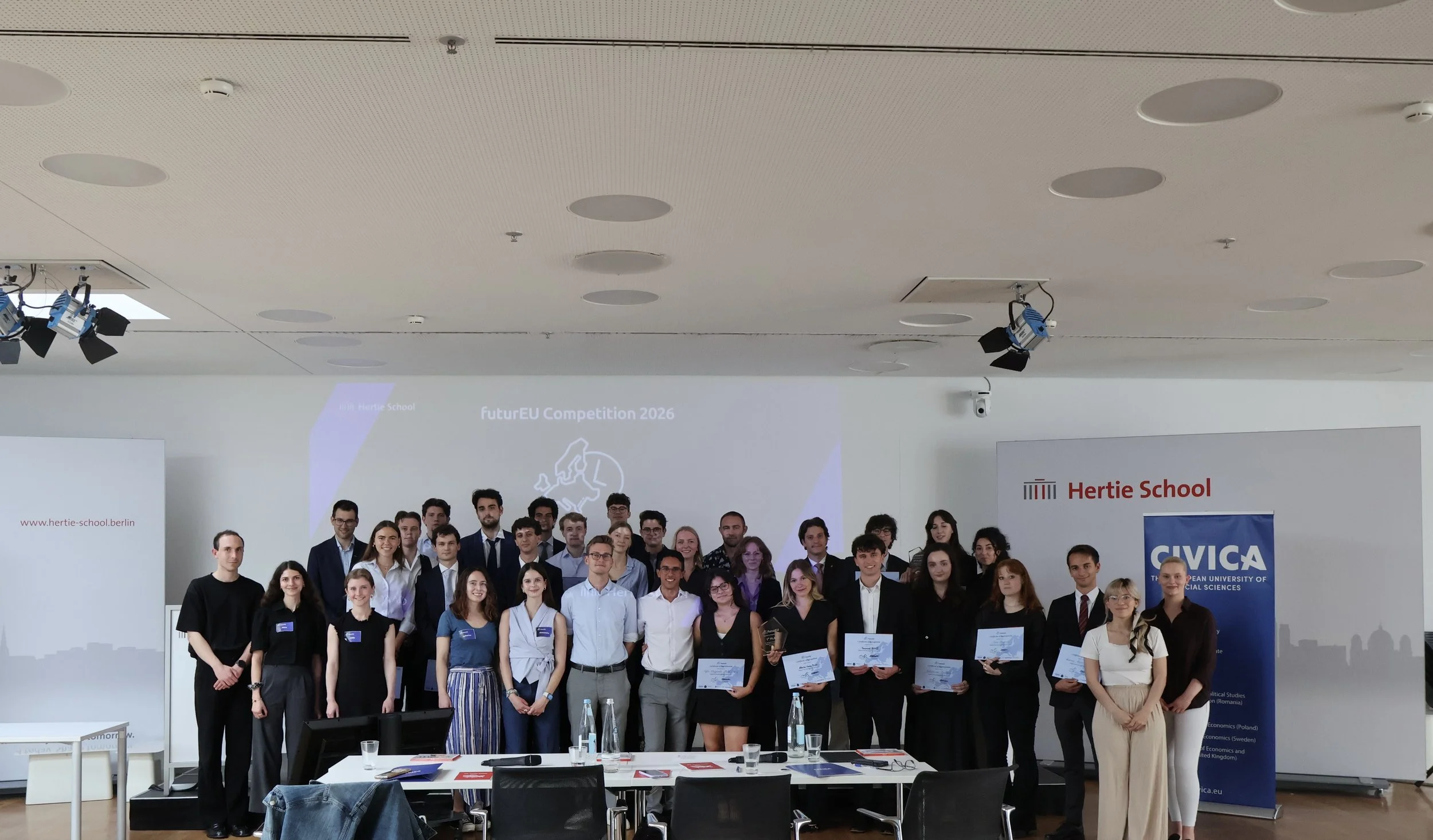
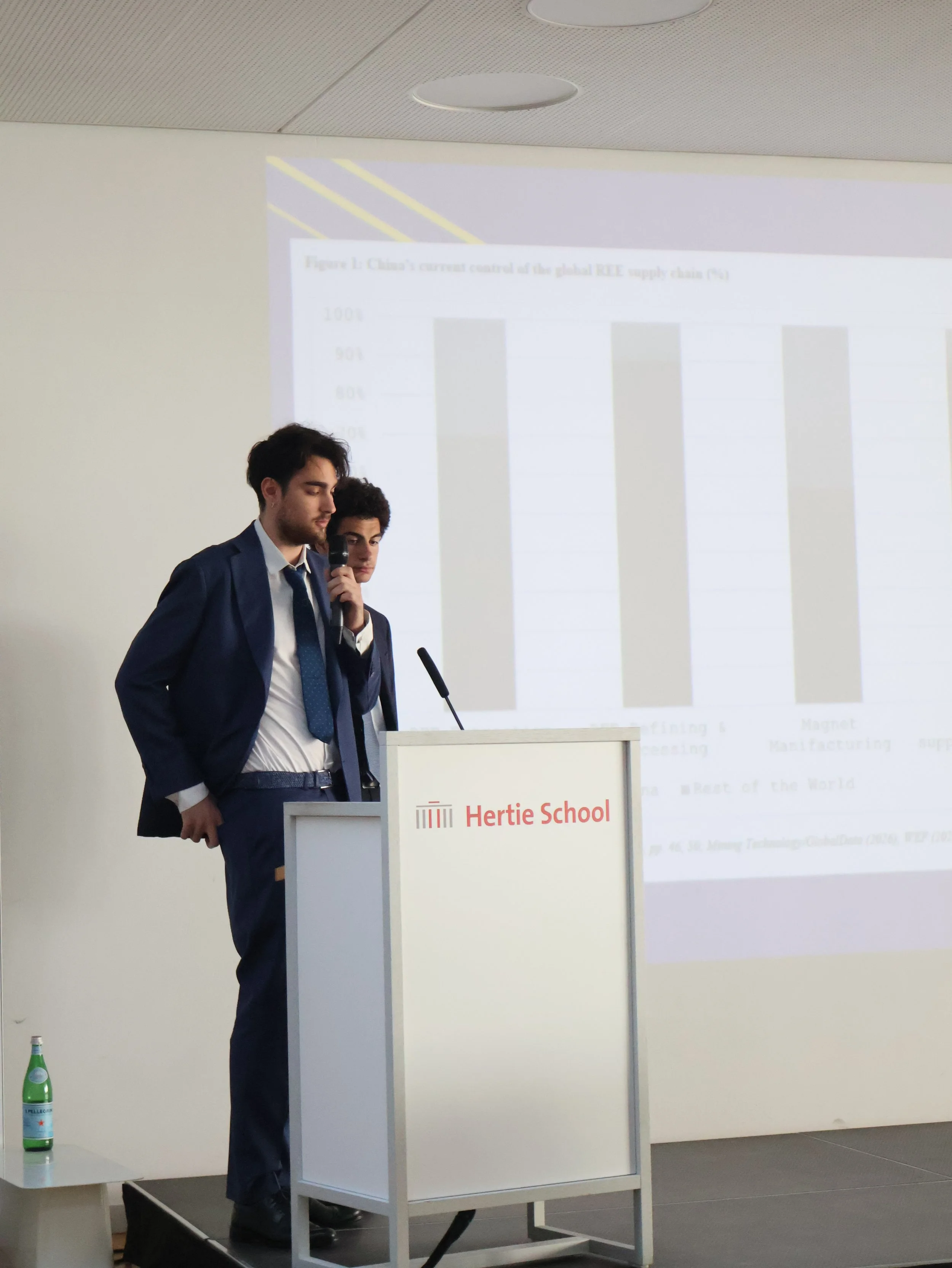
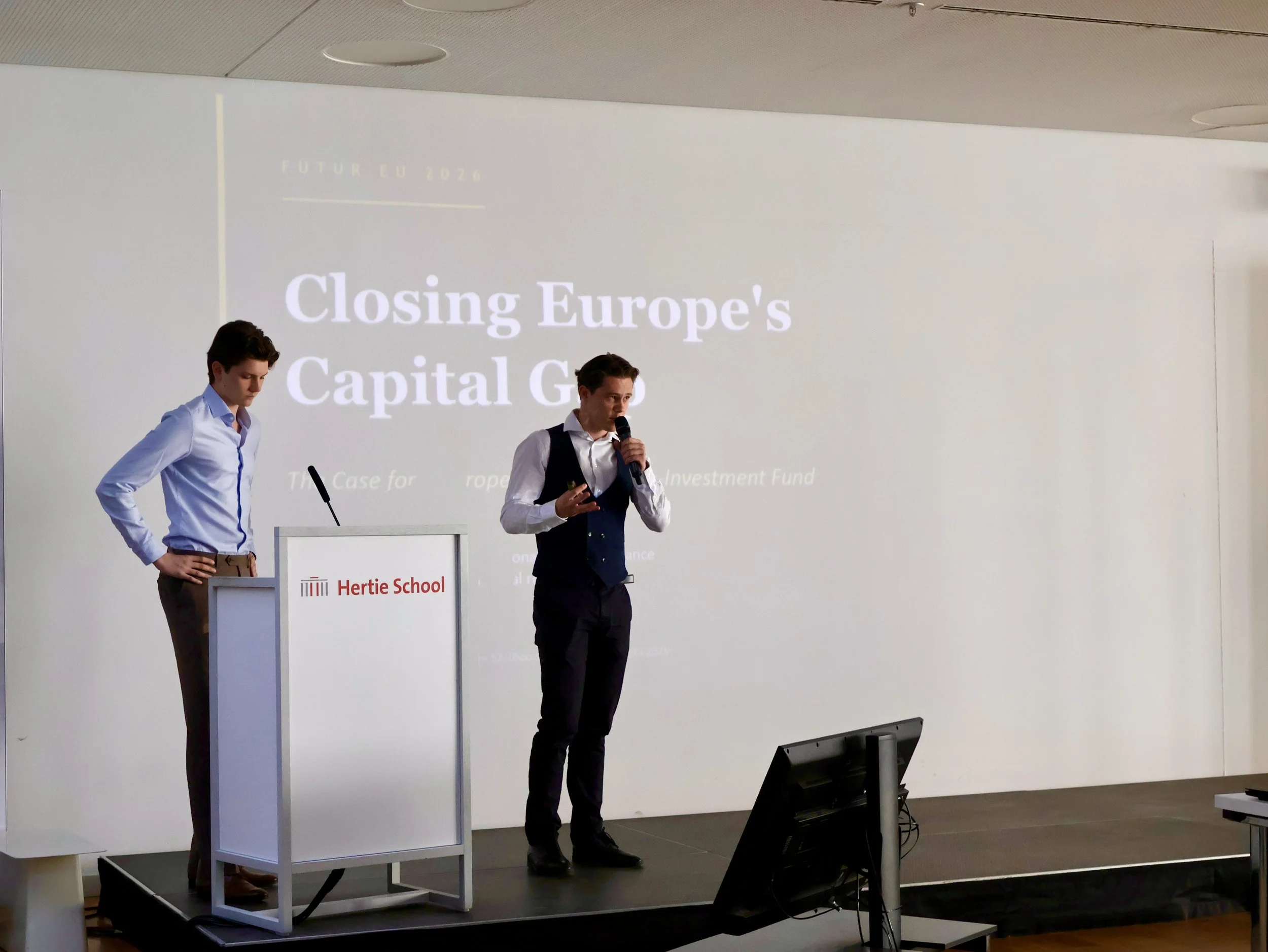
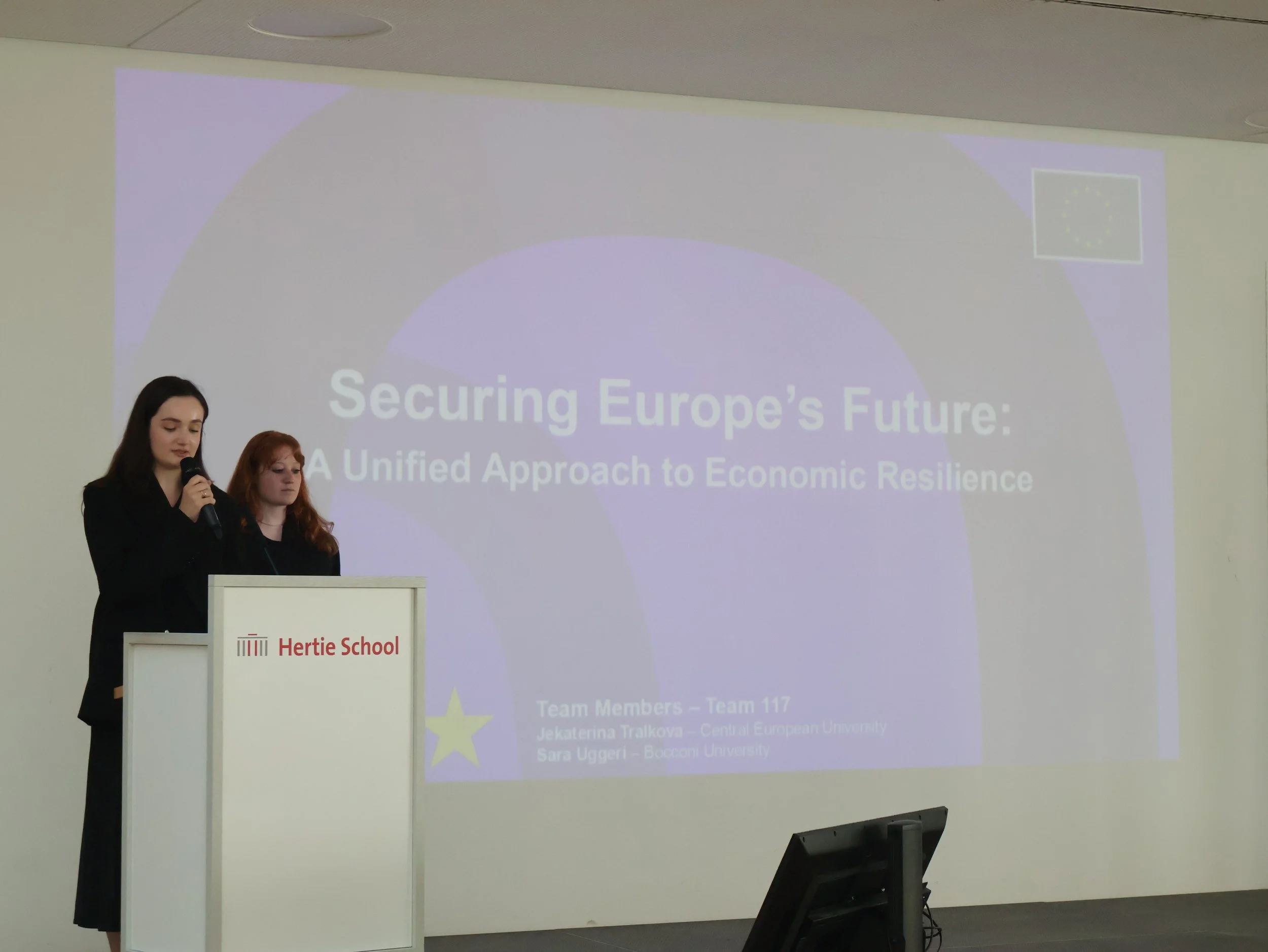
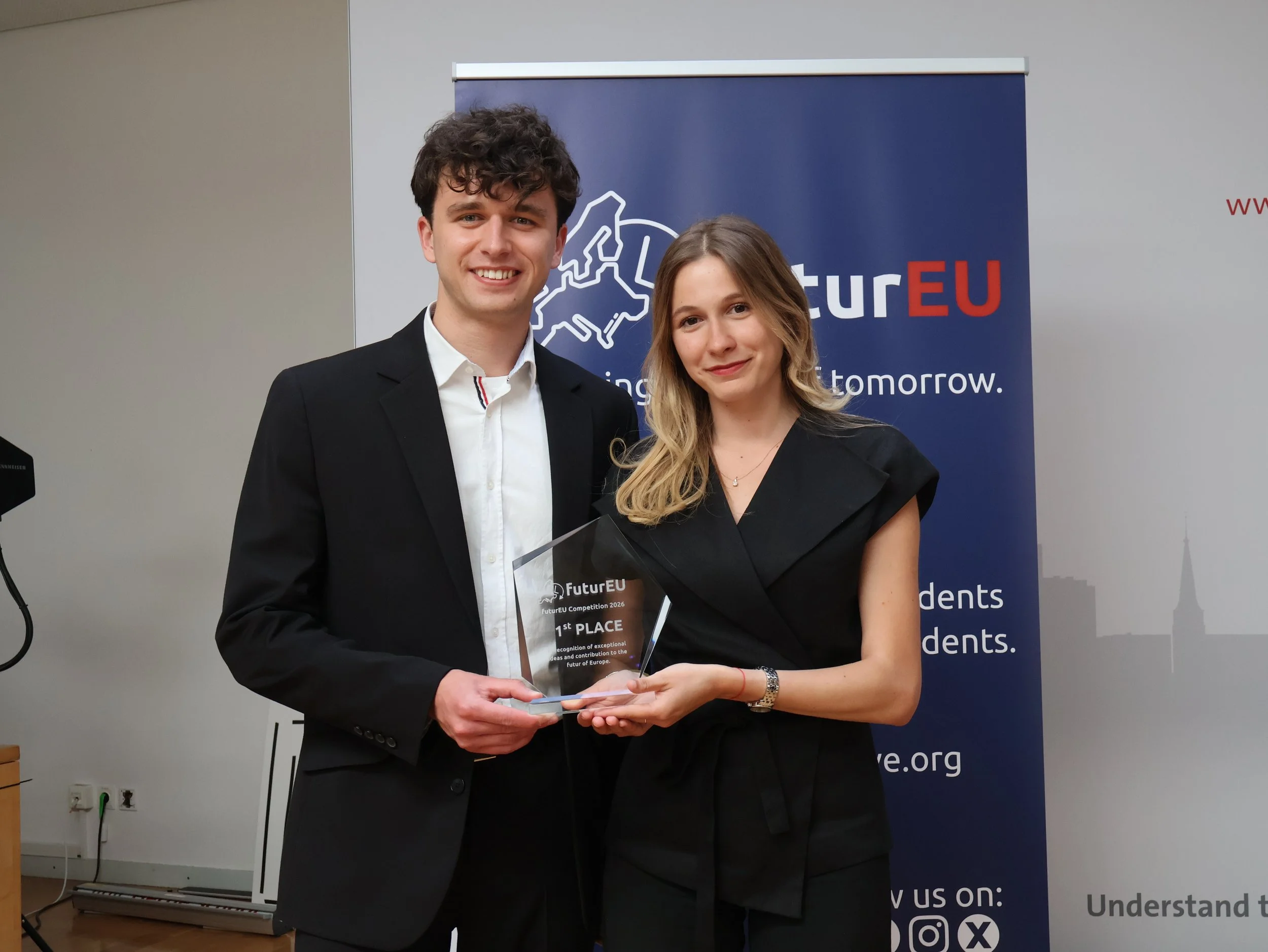
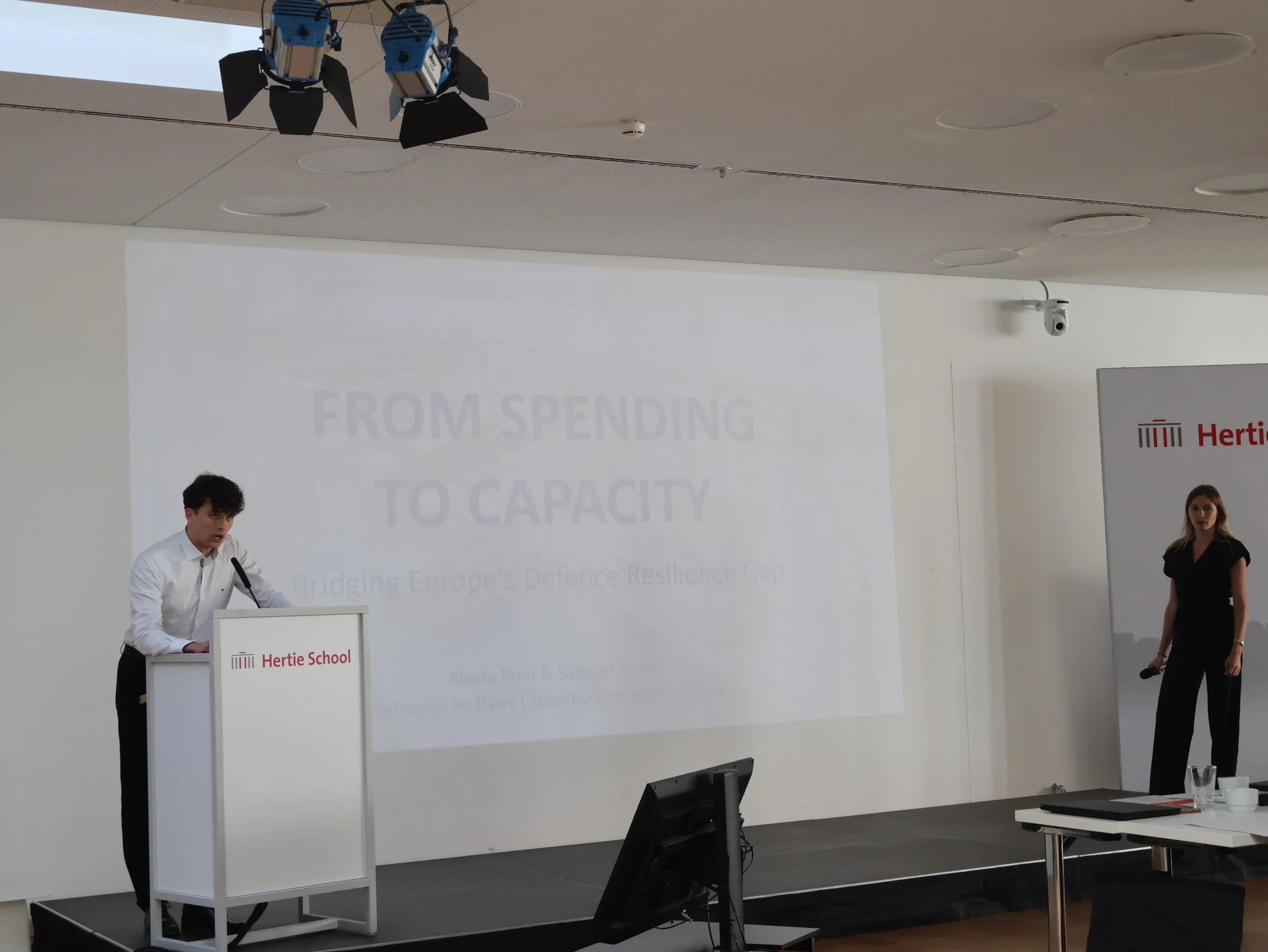
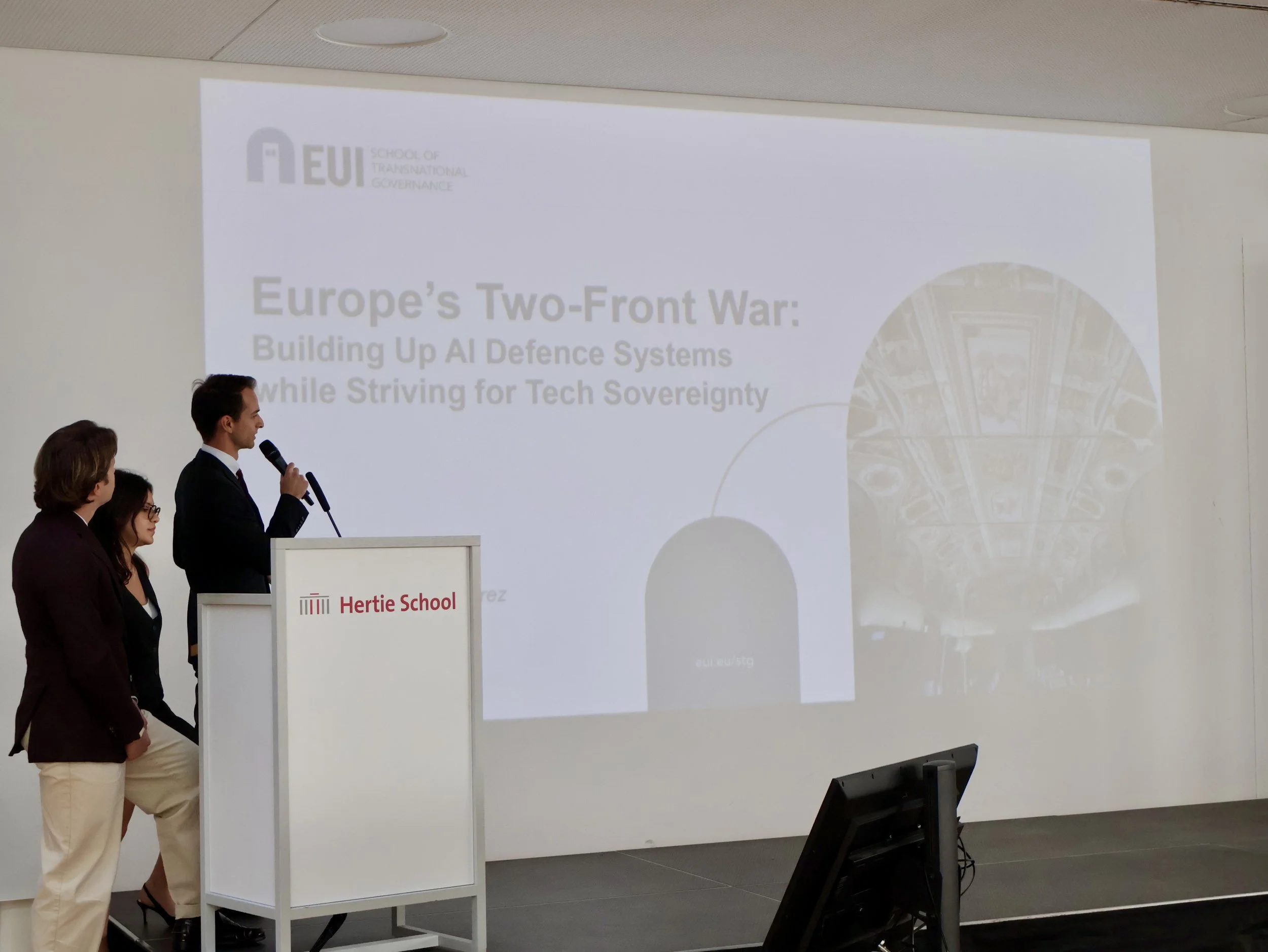
Impressions from last year



The Rules

Nobody likes them; nobody reads them, but you should.
As every competition, ours has rules too. You might think they are too long, too boring, but they will be helpful. When you sign up, you will agree to them, so better take a look at what you are agreeing to!
FAQs
-
The futurEU Competition is an initiative aimed at fostering dialogue and discourse on the future of the European Union. It seeks to engage students and PhD researchers from CIVICA member universities in addressing EU-related challenges through a structured competition.
-
The competition aims to:
Promote awareness of CIVICA and its initiatives.
Encourage collaboration among students from different universities.
Include students' perspectives in academic and public discourse on EU topics.
-
The competition is open to students enrolled in any CIVICA member university for the academic year 2025-2026. Participants must be pursuing a bachelor’s, master’s, or PhD degree. Exchange students are not eligible.
-
You can register individually so that you can be assigned to a team, because in the competition participation is only possible as part of a team. Register here.
-
-
Changes to team composition are only allowed under extraordinary circumstances and must be approved by the management team.
-
The competition consists of two rounds:
Round (Written Round): Teams submit a short summary in the form of Threads of their solution.
Round (Written Round): Selected teams will expand this into a policy brief.
Round (Finals): The top eight teams present their policy brief to a panel of judges.
-
Individual registration: January 12, 2027.
Group registration: January 19, 2027.
Round 1 (Threads submission): February 12, 2027.
Round 2 (policy brief submission): March 21, 2027.
-
The final round is planned to be held in Berlin in April 2026 (exact date will be released soon)
-
The short summary must not exceed 250 words and shall be written in a Threads style. The short summary should only express one coherent idea, not multiple policy solutions or issues.
-
A thread is a structured series of concise, connected statements used to present a complex idea in an engaging and digestible format. For the futurEU Competition, your 250-word summary should adopt a Threads style, mimicking the format used on platforms like X/Twitter. This means breaking your argument into short, impactful sentences or bullet points that logically flow from one idea to the next. The goal is to make your policy recommendation clear, compelling, and accessible while maintaining brevity and precision. Ensure each "point" builds on the previous one to tell a cohesive story, culminating in a concrete policy recommendation.
-
Maximum word count: 1,500 words (excluding the cover page and references).
Must include a cover page, a clear title, structured body (e.g., background, analysis, recommendations), and a reference list.
For more information on the formating requirements, please consult the rules.
-
No, submissions cannot be altered, deleted, or re-sent after the deadline.
-
The panel consists of early-stage researchers, experts, and faculty from CIVICA alliance universities and the Jacques Delors Centre.
-
Written Round: Originality, depth, relevance, logical rigor, and clarity.
Oral Round: Argumentation, style, mastery, responsiveness, and delivery.
-
Yes, all decisions are final and unappealable.
-
Yes, each team member must attend at least one workshops. Failure to do so may result in disqualification.
-
The winning team will receive a plaque and the opportunity to have their work published by the Istituto Affari Internazionali (IAI). Travel and accommodation expenses for the final round will be reimbursed for all qualified teams.
-
Participants must exhibit fair play, respect intellectual property, and ensure the originality of their submissions. Plagiarism or misconduct may result in disqualification.
-
Participants may use generative AI tools, such as large language models, for research, brainstorming and language editing. However, texts that are fully or largely generated by AI are not permitted, as the analysis and policy recommendations must be the team’s own work.
Any use of AI must be disclosed in a short statement, included with the short summary and on the cover page of the policy brief, that names the tools used and what they were used for. Teams remain responsible for the accuracy of all facts and sources in their work.
Breaches of this rule will be treated like plagiarism and may lead to the disqualification of the team.
-
Any questions you may have can be directed to us by writing to competition@futureu-initiative.org